Portage Park District Conserves 550 acres in Shalersville Township

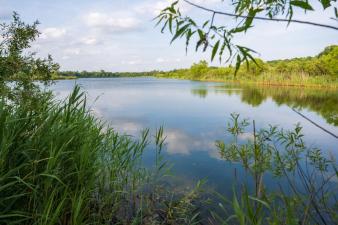
The Portage Park District in collaboration with the Western Reserve Land Conservancy (the Land Conservancy), has acquired and permanently conserved 550 acres of a former sand and gravel mine that will be developed into a future park in Shalersville Township.
The property, which includes unmined forest and wetlands along with former mined lands and lakes, was pre-acquired by the Land Conservancy, who also applied for the state and federal grants which paid for the acquisition and restoration of the property.
“This is a great example of the power of partnerships in conservation,” said Christine Craycroft, Park District Executive Director, “we appreciate working with the Land Conservancy in securing the land, and we’re looking forward to continuing restoration, management and park development into the future”. While a park opening is still years away, the Park District will offer occasional public nature programs and continue park planning and land management in the meantime.
“This project shows the impact we can make when organizations work together,” said Amy Sargent, Conservation Project Manager for Western Reserve Land Conservancy. “Securing this property protects critical wetlands, lakes, forests, and wildlife habitat permanently, and that’s a major win for our region.”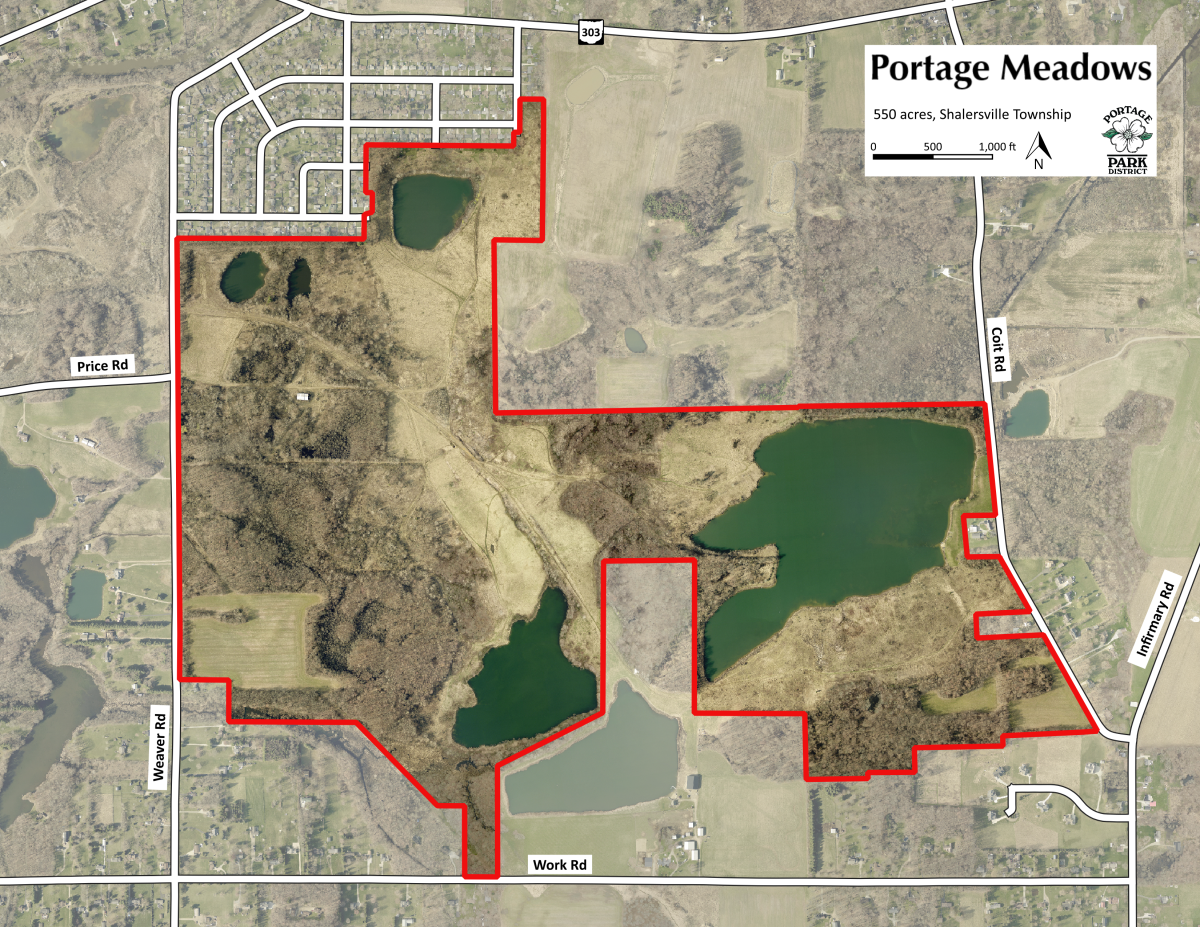
Project funding included approximately $1.65 million from the Clean Ohio Green Space Conservation Fund and about $1.1 million from a North American Wetlands Conservation Act grant in partnership with Ducks Unlimited. Apex Clean Energy, working with the U.S. Fish and Wildlife Service’s Partners for Fish and Wildlife Program, contributed $125,000 to restore 160 acres of native meadow habitat. The Park District also provided roughly $100,000 in local funds to support the effort.
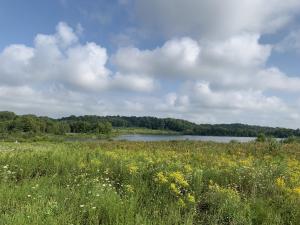
Portage Park District and Western Reserve Land Conservancy worked together to receive a habitat restoration grant through the US Fish and Wildlife Service (USFWS) Partners for Fish and Wildlife Program. The goal of the restoration effort is to remove non-native, invasive shrubs and plants and then establish native grassland species on approximately 160 acres of the property. The grant includes funding for shrub removal, herbicide applications, and native seed mix. Thus far, shrubs have been removed with a forestry mulcher, two drone herbicide applications have been completed, and firebreaks have been established around the restoration areas. USFWS and park staff have worked collaboratively to accomplish this work. Next steps to complete the restoration include conducting a prescribed fire on the site, followed by invasive plant control, and planting the native seeds. USFWS will perform the bulk of this work, aided by Portage Park District.
“The property offers exciting opportunities to preserve intact wetlands, forests, and rare plant communities, while at the same time providing opportunities to restore and heal the landscape. Historic records indicate numerous accounts of rare species that once occurred at the site. With focused stewardship, we have a chance to possibly regain some lost populations. Our project with USFWS has helped us to eliminate scores of invasive plants and shrubs, making way for the establishment of large contiguous tracts of native grasslands. Such habitat is critical to breeding and survival of our native grassland bird species, as well as our pollinators and other wildlife,” said Bob Lange, Park District Natural Areas Manager.
The mission of the Portage Park District is to conserve Portage County’s natural heritage and provide opportunities for its appreciation and enjoyment.
The nationally accredited Western Reserve Land Conservancy - the largest local land trust in Ohio - provides people throughout Ohio with essential natural assets through land conservation and restoration. To date, the Land Conservancy has permanently preserved 79,343 acres at 975 properties; helped create and expand 243 public parks and preserves; led the efforts to create 69 county land banks across Ohio; and planted and distributed more than 16,000 robust trees in Cleveland. For more information, visit wrlandconservancy.org.